
Don Elzer is an environmental practitioner, community development strategist, regenerative stewardship educator, writer and artist whose career has been shaped by a central question: how can communities prosper while strengthening, rather than diminishing, the ecological and cultural systems that sustain them?
For more than three decades, Don has worked across rural and remote British Columbia at the intersection of community and economic development, First Nations interests, environmental stewardship, tourism, culture and land use. His experience includes work as a planner within Canada’s First Nations Treaty Process, as well as consulting assignments involving First Nations, municipalities, businesses, rural communities and other levels of government.
Earlier in his consulting career, Don worked alongside community economic development strategists on economic development research and planning. Their work included jointly preparing federally and provincially supported economic-development studies which placed Don within a broader network of practitioners working with municipalities, rural and remote communities and First Nations throughout British Columbia and Canada.
Don’s work has also extended directly into the realm of downtown revitalization, community design; and resort and crownland planning that was in conjunction with First Nations partnerships. Don was engaged for his expertise in small-footprint tourism, climate-change adaptation and sustainable and innovative solutions for businesses, First Nations and communities.
Through the Canadian Tourism Commission and Bearfoot Canada as well as other related initiatives, Don became an early advocate for forms of tourism and rural economic development that connected economic opportunity with habitat protection, responsible travel, cultural experiences and stewardship of the land. His work included developing ecotourism strategies and regional initiatives intended to strengthen rural economies while protecting the natural assets upon which those economies depend. Don completed the British Columbia’s first Cultural Tourism strategy for the Okanagan Cultural Corridor.
Don’s work within the area of tourism market readiness and the development of travel packaging in Canada allowed him to become a specialistialist in areas of logistics, transport infrastructure and export. He became one of Canada’s authorities on “factor house” planning and Foreign Trade Zones (FTZ’s). He was instrumental with providing the planning and partnerships for the CN Rail Inland Port in Prince George BC.
Don Elzer brings a unique approach to planning since he is both a specialist and a generalist who is able to apply layers of institutional and cultural memory to a project. Today, there is a need to navigate the relationships between land, community, Indigenous knowledge and interests, economic development, government and private sector interests with ecological restoration and long-term stewardship. Don brings decades of experience operating precisely within that intersection.
Equally important is the way Don approaches that work. His relationships with Indigenous communities have developed through years of engagement with land, community and stewardship rather than through a single project or consultation exercise. His experience within the Treaty Process and in initiatives involving partnerships with First Nations provides an important understanding of the need to engage Indigenous communities early, respectfully and meaningfully—and to recognize that Indigenous participation should help shape the project rather than simply be sought as an endorsement of it.
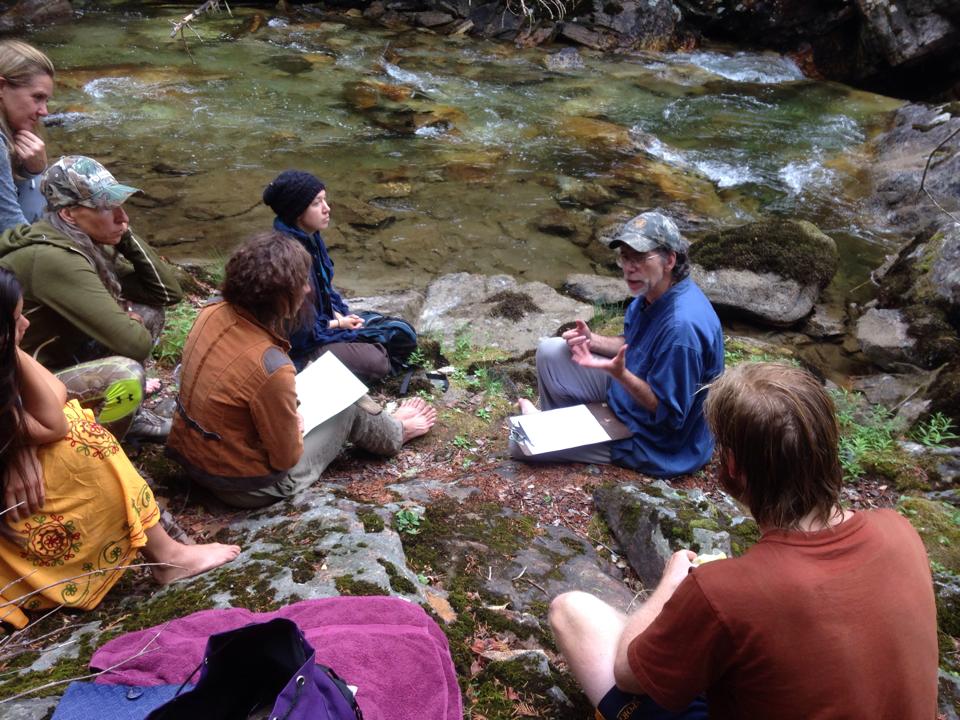
Don is also the founder of the Wildcraft Forest School, through which his work has evolved from sustainability toward regenerative stewardship: the idea that our responsibility is not simply to reduce environmental harm, but to actively restore ecological relationships and strengthen the capacity of natural systems to thrive. The School’s programs in wildcrafting, rewilding, forest immersion, nature connection and ecological stewardship have reached participants in more than 40 countries.
Don developed the first Forest Therapy certification training program in Canada and for well over a decade Yasei Shinrin Yoku was only one of three professional training programs internationally. Don has spent decades observing and working within forest ecosystems. His work explores biodiversity, habitat regeneration, bioregionalism, ecological reciprocity and the relationship between human wellbeing and healthy natural systems. He developed Canada’s first Forest-based Carbon Offsetting model for small scale farm and forest operations.
Today he is specializing in putting together research and development partnerships that expand the potential for foods, medicines and supplements connected to Canadian forests and wildlands while building regenerative stewardship strategies that will protect those forests and wildlands within long-term initiatives.
He is also a writer, publisher and multidisciplinary artist whose creative practice encompasses painting, environmental sculpture, assemblage and storytelling. Across these disciplines, Don continues to explore the relationships between culture, landscape, community and the living systems upon which they depend.
For more information Don Elzer can be reached by email at: donelzer@uniserve.com
His website is: www.donelzer.com
Meaning and Purpose Create
Exceptional Team Results
A Podcast with Don Elzer
“Leaders like Me” interviews Don Elzer of the Wildcraft Forest School. The interview is titled “Meaning and Purpose Create Exceptional Team Results” and the intro describes Don Elzer as living his meaning and purpose in all aspects of his life.
This powerful approach has helped him articulate a new way of thinking about how we should live in this world. His wisdom will help you understand the importance of meaning and purpose in creating an irresistible focal point for your team. Prepare to have your worldview challenged…
Some of the gems from this podcast include:
- The essential element of leadership is meaning and purpose.”
- Instilling the idea of meaning becomes the anchor for what makes a person.”
- For a leader, encouraging meaning in people’s lives should be front and center.”
- Joy becomes the key result of meaning in your work.”
- When we’ve discovered our meaning and embrace our purpose we are basically unstoppable.”
Don Elzer
A specialist in developing regenerative strategies for Communities, Creative’s and the Commons.


Subscribe to Don Elzer’s Newsletter and receive updates and news about new releases from his studio.
